Buying Advice
Originally published 8 Oct 2026 · 9 min read
Petrol Above R30 a Litre: What Does It Actually Cost to Drive an Electric Car in South Africa?
95 Unleaded crossed R30 a litre inland in October, and early CEF data is pointing at another R4,58 in November. We ran the real numbers on electric-car running costs in South Africa — home charging, public charging, and what the purchase price does to the story.
Editor / Motoring Writer
DWL Journal
Real cars. Real advice. The right drive for you.
The threshold nobody wanted to cross arrived on 7 October 2026: for the first time, a litre of 95 Unleaded cost more than R30 inland — R30,25 at the pump, up R3,33 from September. And the early data from the Central Energy Fund is already pointing at more. A preliminary under-recovery of roughly R4,58 a litre is showing for 95 petrol in November, with 93 Unleaded tracking close behind at around R4,29.
That figure is not the November price. It is an early indication, and it will move before the official announcement at month-end as international petroleum prices and the rand/US dollar exchange rate shift. But the direction is uncomfortable, and every extra rand a litre changes the arithmetic South African buyers run when choosing what to drive next. For a growing number of them, that arithmetic now includes a question that used to be waved away as a fringe concern: what does it actually cost to drive an electric car?
The November fuel-price warning
Every month, the Central Energy Fund (CEF) tracks what fuel actually costs to replace at South African refineries against the regulated pump price. When replacement costs run higher than the pump price, the shortfall — the under-recovery — is flagged for correction in the next adjustment. Early October data shows exactly that: a preliminary over-recovery shortfall of about R4,58/l for 95 Unleaded and R4,29/l for 93, with diesel also indicated higher.
The drivers are the usual pairing: firm international oil prices and a rand that has weakened against the US dollar. Both matter because South Africa imports most of its fuel. The knock-on runs well beyond private cars — transport operators face higher diesel bills, producers face higher input costs, and some of that lands back on consumers as inflation. If the current preliminary CEF indication were ultimately reflected at the pump in November, 95 Unleaded inland would sit in the region of R34,83 — a scenario, not a prediction. Treat everything below that assumes this carefully, and re-check the official price when the Department announces it.

So what does an electric car actually cost to run?
An electric car's "fuel" is electricity, measured in kilowatt-hours (kWh). The comparison with petrol comes down to a single figure: energy cost per 100km. To keep the maths consistent throughout this article, we use an illustrative household electricity price of R2,72/kWh — a common residential rate, but only a reference point.
Three honest caveats. First, electricity tariffs differ by municipality, and some households pay different rates depending on tariff structure and usage, so your price may be above or below R2,72. Second, charging has losses: some energy is lost as heat and in the charger, so what your car reports as consumed is not identical to what is drawn from the wall. Third, the official consumption figures quoted below are WLTP figures — a standardised European lab test (Worldwide Harmonised Light Vehicles Test Procedure) that gives a comparable benchmark between cars, not a promise for your driveway.
Six EVs that show where the South African market is heading
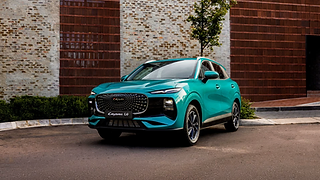
The entry point for EV ownership in South Africa has moved dramatically. BYD's Dolphin Surf starts at R341,900 and Chery's first EV, the Q, at R349,900 — both less than many hot hatches — and the market now stretches from city cars to large electric SUVs. All prices and specifications below were checked against the manufacturers' official South African information at the time of writing.

| Vehicle | Approx. price | Battery | Claimed range (WLTP) | Consumption | Electricity cost/100km |
|---|---|---|---|---|---|
| BYD Dolphin Surf Comfort | R341,900 | 30 kWh | 232 km | ±13 kWh/100km | R35,36 |
| Chery Q Comfort | R349,900 | 42,7 kWh | 400 km (NEDC) | 12 kWh/100km | R32,64 |
| BYD Dolphin Surf Dynamic | R395,900 | 38,8 kWh | 295 km | ±13,2 kWh/100km (calculated) | R35,90 |
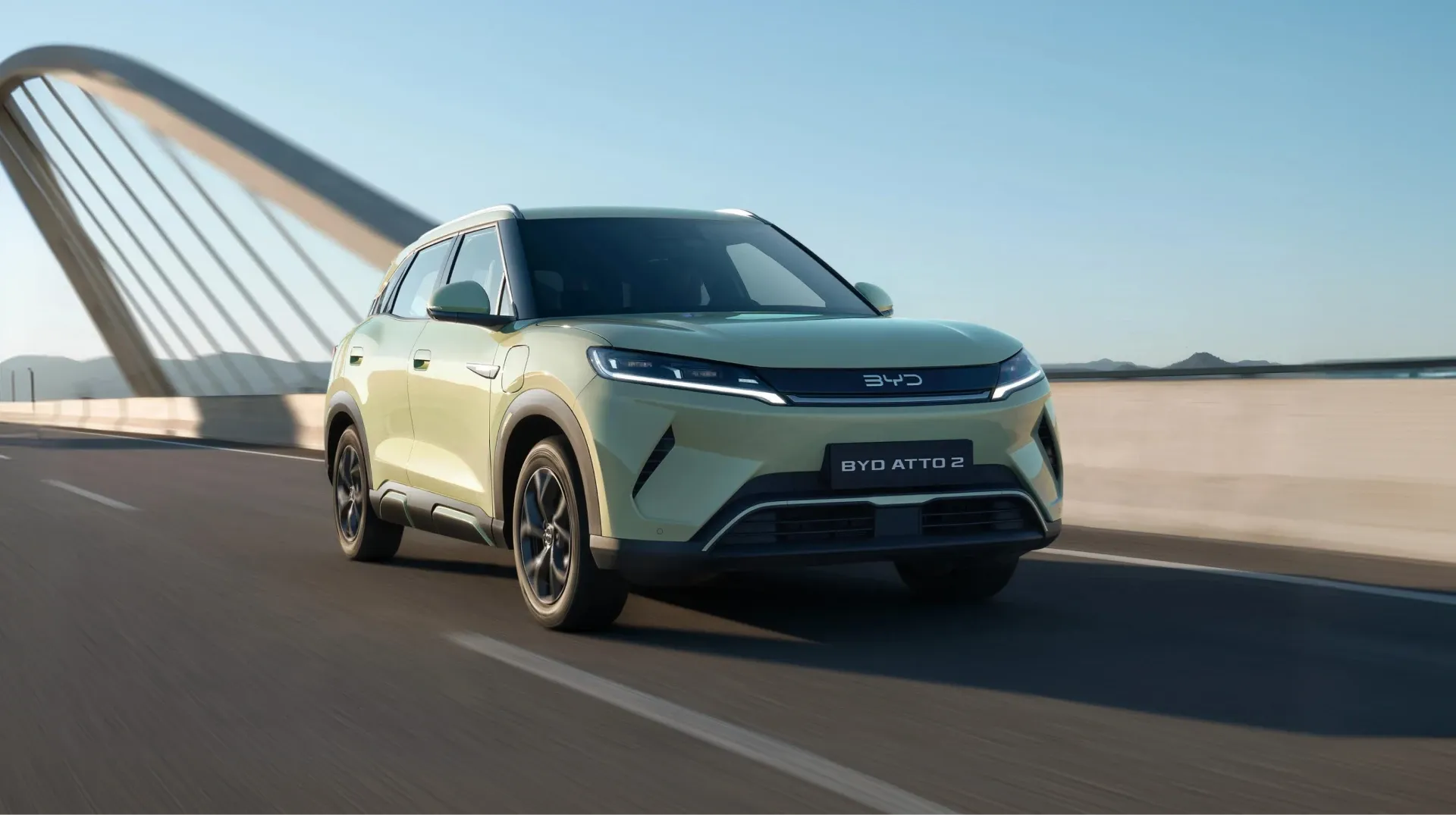
| BYD Atto 2 EV Dynamic | R529,900 | 51,13 kWh | 345 km | 13,2 kWh/100km | R35,90 |
| Volvo EX30 Single Motor | R735,500 | 51 kWh | 344 km | 15,6 kWh/100km | R42,43 |
| Volvo EX30 Single Motor Extended Range | R868,400 | 69 kWh | 476 km | 14,5 kWh/100km | R39,44 |
| BYD Sealion 7 Premium | R1,114,900 | 82,56 kWh | 482 km | ±17,1 kWh/100km (calculated) | R46,51 |
Electricity cost is consumption × R2,72/kWh, home charging only. Figures marked "calculated" are derived from the official battery capacity and WLTP range rather than a published consumption figure. The Chery Q's range is claimed on the NEDC standard, a less stringent cycle than WLTP, so expect noticeably less in real use. Real-world range will be lower than the official cycle — speed, temperature, driving style, traffic, terrain, air conditioning and vehicle load all bite.

The cost of 100km
Now put a petrol car next to them. We'll use a realistic 7L/100km — what a compact petrol crossover returns in mixed driving. At October's inland 95 price of R30,25, that's R211,75 per 100km. If the preliminary November increase materialised in full, the same 100km would cost about R243,81 — a scenario again, not a forecast.
Against that, the electric cars above travel the same distance for R32,64 (Chery Q Comfort) to R46,51 (Sealion 7). The gap is enormous — roughly 75 to 105 litres' worth of arithmetic per 1,000km — but it is an energy-cost gap only, and it assumes home charging at a residential tariff. A small EV against a big petrol SUV, or a claimed EV figure against real-world petrol consumption, would be a dishonest comparison; we've deliberately kept like with like.

What 20,000km a year looks like
Annual mileage is where these numbers stop being trivia and start being money. Take a driver covering 20,000km a year.
Petrol car at 7L/100km
EV at 13kWh/100km (Dolphin Surf Comfort)
The Q's claimed 12kWh/100km makes it the cheapest runner in this comparison: 2,400 kWh over 20,000km — R6,528 a year, about R544 a month. A 15,6kWh/100km EV such as the EX30 Single Motor draws 3,120 kWh over the same distance — R8,486 a year, about R707 a month. Still roughly R2,800 to R3,400 a month cheaper than the petrol car on energy alone. These are illustrative figures at the stated tariffs, not ownership guarantees.
"Where are you charging it?"
This is the question that decides whether the savings above are real for you. Home charging at household tariffs is what makes an EV cheap to run — plug in overnight, wake up ready, and the R589-a-month arithmetic holds. Public DC fast charging costs considerably more per kWh, and it is priced for convenience and speed. Apartment dwellers without dedicated parking, or drivers who lean on public chargers every week, see the apparent energy-cost advantage shrink substantially before a single kilometre is driven.
But the cheapest energy doesn't mean the cheapest car
Energy cost is only one component of total vehicle ownership cost. Before the comparison is fair, an EV buyer has to weigh purchase price, finance interest, deposit and balloon structure, insurance, maintenance, tyres, battery warranty terms, charging equipment (a wallbox installation can run several thousand rand), electricity, public charging, depreciation and resale value.
This is why low consumption does not automatically make an expensive EV financially cheaper overall. The Sealion 7 Premium costs about R46,51 per 100km in electricity — a fraction of the petrol car's R211,75 — but it starts at R1,114,900. Against a petrol SUV at half the price, the fuel saving of roughly R2,500 a month has to claw back a purchase-price gap of hundreds of thousands of rand in finance charges and depreciation before it wins. It might, over many years and high mileage. It also might not. The same logic, inverted, is why the R341,900 Dolphin Surf and the R349,900 Chery Q are the most consequential EVs on this list: their running costs are the lowest here, and their entry prices no longer demand a leap of faith.
Why annual mileage matters
The savings scale almost linearly with distance:
- 10,000km a year: the petrol car uses 700 litres — R21,175 a year at October prices — against about R3,536 of home electricity for a 13kWh/100km EV. A real saving of around R17,639 a year, meaningful but modest.
- 20,000km a year: the difference grows to roughly R35,278 a year, and about R41,690 if the November scenario materialises.
- 30,000–40,000km a year: at 30,000km the gap widens to about R52,917 a year — where an EV's lower energy cost becomes genuinely difficult to ignore, assuming reliable charging and a purchase price that makes sense.
Low-mileage drivers should be honest with themselves: the fuel saving alone may never justify a higher purchase price. High-mileage drivers with home charging are the buyers the maths favours most.
Petrol, hybrid or EV?
There is no universal winner — only a right answer for your driveway, your kilometres and your budget.
Petrol still makes sense for someone who travels long distances into areas without charging, needs widespread refuelling, wants the lowest purchase price, or drives relatively few kilometres a year.
Hybrid suits the driver who wants lower fuel consumption without depending on a charger — mixed urban and highway routes, no infrastructure required, a practical stepping stone between petrol and full electric.
Electric fits someone who drives significant kilometres, can charge reliably at home, has predictable daily driving, plans to keep the car for several years, wants lower energy costs, and can make the purchase and finance numbers genuinely work. For the average South African driver, an EV makes financial sense only when those conditions line up — not because fuel prices are rising, but because the full cost of ownership, not just the fuel line, comes out ahead.
The real cost is getting from A to B
Petrol above R30 a litre, with a further increase indicated for November, has changed the conversation. But the smartest buyer isn't the person who blindly chooses the cheapest fuel. It is the person who calculates the complete cost of getting from A to B — the instalment, the insurance, the interest, the charging, and the fuel — and then buys the car that wins on the whole sum, not one line of it.
If you're running those numbers for your own driveway — petrol, hybrid or electric — use the finance calculator on this site, then talk to us. We'll help you compare the total cost, not the marketing.
Before you purchase a car. Think Drive With Lesedi. Think DWL Auto.
Sources: Central Energy Fund preliminary data and the October 2026 pump-price announcement; Chery South Africa; BYD South Africa (official model pages and specification sheets); Volvo Cars South Africa (official EX30 model page and current retail price list). Calculations are illustrative at R2,72/kWh and current inland 95 Unleaded pricing; electricity tariffs, charging losses and real-world consumption will move your actual figures. This article is an energy-cost comparison, not a complete ownership comparison.
Have questions about your next car?
Talk to Lesedi — real guidance on budget, finance and the right car for your life. No pressure, no fine print.