Buying Advice
Originally published 23 Sep 2026 · 8 min read
Why the Chery Tiggo 4 Cross Is One of South Africa's Best-Selling Compact SUVs
The Tiggo 4 Cross gets a lot right — price, specification, presence. But the honest question isn't whether the bank will approve you. It's whether the car still fits your life after every rand of ownership cost. Lesedi's full, honest breakdown.
Sales Consultant / Executive
DWL Journal
Real cars. Real advice. The right drive for you.

South Africans have fallen for the Chery Tiggo 4 Cross. Spend twenty minutes in a Chery dealership on a Saturday morning and you'll see the same thing: families climbing in and out of a compact crossover that, a few years ago, most of them had never heard of.
It's the combination
The Tiggo 4 Cross isn't the cheapest compact SUV on sale, it isn't the fastest, and it doesn't pretend to be either. What it does offer is an unusual combination: modern design, a genuinely well-equipped cabin, a choice of engines and derivatives, and a price that still starts under R300,000.
Tiger claw-inspired LED headlights, a 10.25-inch integrated dual touchscreen, wireless smartphone connectivity and faux-leather finishes are the kind of details buyers used to associate with cars a segment or two higher. That's the combination doing the work.

"Don't budget for the car repayment. Budget for the whole car."
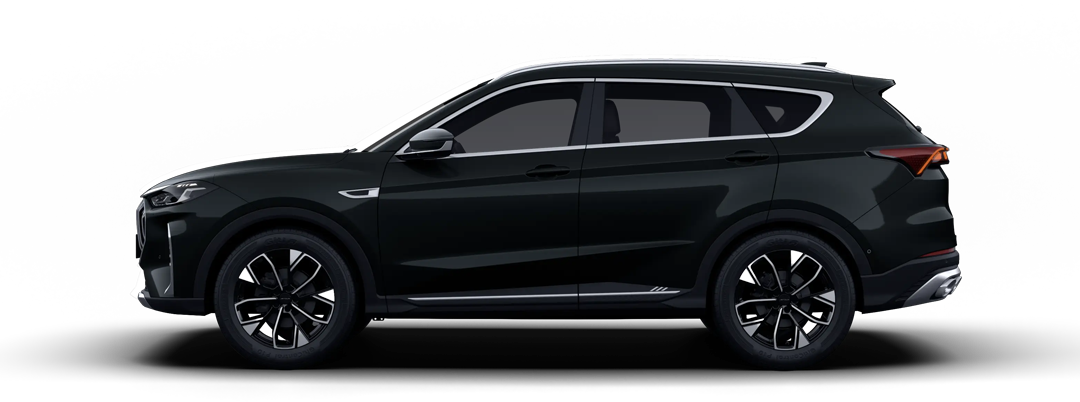
Meet the Tiggo 4 Cross
Take a closer look.


Images courtesy of Chery South Africa (chery.co.za).
How much does a Tiggo 4 Cross cost?
The current South African range runs from the entry 1.5-litre petrol LiT to the turbocharged Elite. Indicative pricing at the time of writing:
Indicative pricing sourced from Chery South Africa's dealer network at the time of writing. E&OE — prices are subject to change without notice; confirm current pricing and specification with the dealer before you buy.
But can you actually afford one?
This is where a lot of car-buying articles stop — and it's exactly where the real conversation should start. Getting approved for vehicle finance and being able to comfortably afford a vehicle are two very different things.
A finance provider looks at your income, your expenses and your credit record, and decides whether lending to you is an acceptable risk. The finance provider does not decide whether the repayment leaves you room to live. That part is yours to own.
R13,000 is not a comfortable ownership budget
There's a number that comes up constantly in South African car-buying conversations: R13,000. "If I earn thirteen thousand, can I get a car?"
The honest answer: someone earning around R13,000 a month may potentially be able to apply for vehicle finance, depending on their circumstances. But an approval on paper does not mean the car fits your life — and it definitely doesn't mean the car should consume your entire salary.
Let's look at a realistic example
Take an illustrative monthly income of R13,000, a compact SUV financed with little or no deposit, and typical entry-level ownership costs:
Illustrative monthly income: R13,000
R13,000 income vs R13,500 example expenses
Qualification ≠ Affordability. In this example the expenses are R500 more than the income — before a single rand of savings, emergencies or unexpected costs. That's not a car you can afford. That's a car that owns you.
*Illustrative example only. Actual finance repayments, insurance, fuel and living expenses vary according to individual circumstances. This example must not be read as a guaranteed qualifying salary.
And if you're a new driver, insurance can change everything
New driver?
Your insurance could change the entire calculation.
Drivers with less than three years' licensed driving experience are often quoted significantly different insurance premiums, depending on their age, where they live, the vehicle being insured and the insurer they approach. Two drivers buying the exact same Tiggo 4 Cross can pay very different premiums for the same cover.
Get the insurance quotation BEFORE committing to the vehicle. A quote takes minutes. Being locked into a car you can't afford to insure takes years to fix.
You may need more than your salary
Your salary isn't the whole story.
Earning around R13,000 may potentially allow you to apply for vehicle finance depending on your circumstances — but that does not automatically mean you can comfortably afford the vehicle.
Additional legitimate income from a side hustle or a small business can help your overall household budget, and some finance providers may consider it as part of your application — but additional income does not guarantee finance approval.
Qualification is not affordability. You should still have enough money left to live, eat, save and deal with emergencies after paying for the vehicle.
What does the car really cost you every month?
The instalment is only one line. A realistic monthly ownership budget for a compact SUV includes the repayment, comprehensive insurance, fuel, and a running contribution towards tyres, services and the things that always seem to happen in the same month.
On a R309,900 Tiggo 4 Cross LiT CVT with no deposit over 72 months at current interest rates, the instalment alone lands in the region of R6,300 per month before insurance and fuel. Add those and you're looking at R8,500-plus of monthly motoring before you've bought a single grocery.
"Can I get approved?" is not the same question as "Can I comfortably afford this car?"
The question I want you to ask
Before you sign anything, ask yourself this: after every car-related rand leaves my account, can I still live, save and absorb an emergency?
If the honest answer is no, the answer isn't necessarily "no car". It may mean a cheaper derivative, a bigger deposit, a shorter term, or waiting another six months. That is a far better outcome than a car you resent in month six.
What about the deposit?
A deposit reduces the amount you finance, which reduces both the monthly instalment and the total interest you pay over the term. Even a modest deposit meaningfully softens the monthly commitment on a Tiggo 4 Cross. If you can't put one down today, that's not a disqualifier — but it is a signal to budget more conservatively, and to treat balloon payments with respect: they make the monthly look manageable while deferring the pain to the end of the term.
Don't forget your credit profile
Your credit record decides both whether you're approved and what interest rate you're offered — and the rate moves the instalment more than most buyers realise. Before you visit a dealership, check your credit record, settle small retail accounts where you can, and make sure the information on file is accurate. A month of tidy credit behaviour can be worth more than a month of negotiating.
Which Tiggo 4 should you choose?
The range is simpler than it looks. The naturally aspirated 1.5 LiT derivatives are the value play, with the CVT adding everyday convenience for urban driving. The turbocharged 1.5T versions are where the range gets interesting: more response for overtaking and more standard equipment. The Million Edition sits in the middle as a well-specified sweet spot; the Elite brings the full feature set. And if budget is the primary constraint, the Tiggo 4 Pro sibling starts even lower with the same 1.5 engine.
Choose with your monthly budget, not just your heart — and remember that higher derivatives also cost more to insure.
And then there's the Tiggo 4 Cross HEV
If your monthly fuel spend is the line that hurts, the Tiggo Cross HEV is worth a look. Chery's hybrid system pairs the 1.5-litre petrol engine with an electric motor for 150 kW and 310 Nm, with claimed consumption of just 5.4 L/100 km and a total range of up to 1,000 km. It costs more up front — from R439,900 in Comfort grade — and hybrid buyers should still do the whole-of-ownership maths rather than assume fuel savings cover the price gap.
So why is the Tiggo 4 so popular?
Because it answers more than one question at once. It looks current. It's equipped like a more expensive car. It's sized for South African suburbs and priced within reach of a first-time buyer. And it's sold through a dealer network that has made affordability conversations — deposit, term, balloon, insurance — part of the pitch.
The space helps too. A compact footprint with a genuinely usable cabin and boot means the Tiggo 4 Cross does the school run, the month-end shop and the December road trip without pretending to be anything it isn't.
"A car should improve your life. It shouldn't consume your entire salary."
My advice before you buy
- Do your own affordability exercise before you visit any dealership — the whole car, not just the instalment.
- Get an insurance quote on the exact derivative you want, before you commit.
- Check your credit record and tidy up what you can.
- Put down a deposit if you possibly can, and treat balloon payments with respect.
- Choose the derivative your monthly budget supports, not the one your heart wants.
- Buy the car you can still afford in month 24, not just month 1.
Need help choosing?
Whether you're interested in the Tiggo 4 Cross, another Chery, or a completely different brand, Drive With Lesedi can help you compare your options and source the vehicle that makes sense for your needs and budget.
Have questions about your next car?
Talk to Lesedi — real guidance on budget, finance and the right car for your life. No pressure, no fine print.