Automotive News
Originally published 24 Oct 2026 · 11 min read
The New GWM HAVAL H7 Has Arrived in South Africa — Six Derivatives, Three Powertrains and a 280 kW Flagship
GWM's all-new HAVAL H7 brings six derivatives, three powertrain options and prices from R554,900 to R794,900. Here is what South African buyers need to know.
Editor / Motoring Writer
DWL Journal
Real cars. Real advice. The right drive for you.

GWM has introduced a new generation of the HAVAL H7 to South Africa, bringing a more imposing design, three distinct powertrain options and a flagship plug-in hybrid capable of producing 280 kW and 670 Nm. With prices ranging from R554,900 to R794,900, the question is whether this SUV offers the right balance of performance, practicality and everyday usability for South African buyers.
A Different H7 for a Different Kind of Buyer
The SUV market has become one of the most competitive segments in South Africa. Buyers increasingly expect more than a commanding driving position and a spacious cabin. They want technology, safety, performance and a price that makes sense over the entire ownership period.
GWM's all-new HAVAL H7 enters this environment with a substantially different proposition from its predecessor.
Introduced locally on 22 October 2026, the new generation adopts a more upright, boxy silhouette and expands the range to six derivatives across petrol, hybrid and plug-in hybrid powertrains.
The starting price is R554,900 for the H7 2.0T Super Luxury 4x2, while the range-topping H7 1.5T PHEV Ultra Luxury 4x4 is priced at R794,900.
That places the H7 in a part of the market where buyers have several competing SUVs to consider. Its appeal will depend on which version they choose and whether its equipment and powertrain suit their daily driving requirements.
Design: A More Purposeful SUV
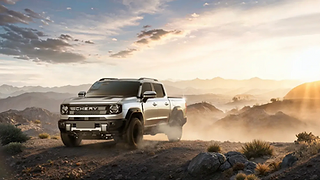
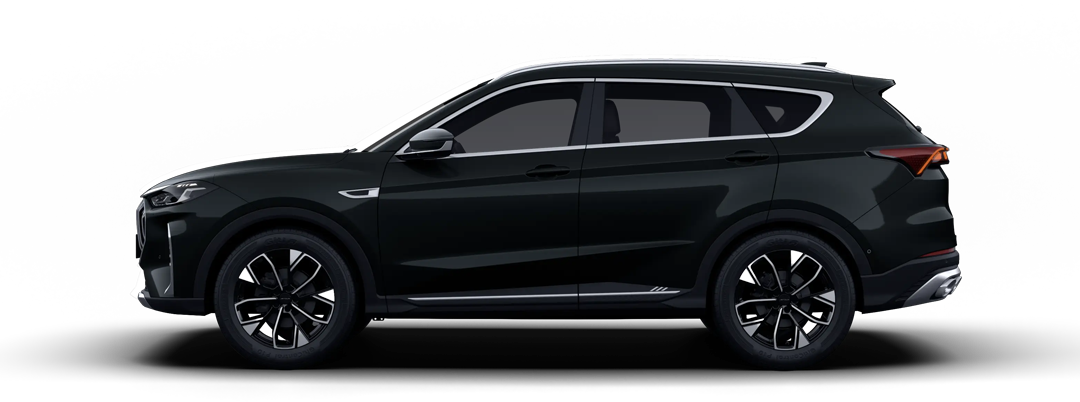
The new H7 makes a strong visual statement with its upright proportions, squared-off bodywork and prominent exterior detailing.
Rather than following the softer, rounded styling found on many family SUVs, the H7 adopts a more rugged appearance. Its front-end design, pronounced wheel arches and tailgate-mounted spare wheel contribute to an image that leans towards adventure-oriented motoring.

The South African model measures 4,800 mm in length, 1,950 mm in width and 1,843 mm in height, with a wheelbase of 2,738 mm.
Ground clearance is listed at 210 mm, while the approach and departure angles measure 25 and 32 degrees respectively. The stated wading depth is 580 mm.
These figures suggest that the H7 has been designed to accommodate more than smooth urban roads. However, buyers should remember that ground clearance and approach angles alone do not determine off-road capability. Tyres, traction systems, vehicle weight and driver experience also matter.
The 4WD derivatives add equipment intended to improve traction on loose and uneven surfaces, although the H7 remains a unibody SUV rather than a traditional body-on-frame off-roader.


Three Powertrains, Six Derivatives
One of the most important aspects of the new H7 is the choice of powertrains.
Instead of forcing every buyer into the same engine configuration, GWM offers conventional turbo-petrol power, a self-charging hybrid and two plug-in hybrid configurations.
Each serves a different type of owner.
1. The 2.0T Turbo-Petrol
The conventional petrol range uses GWM's 2.0-litre 4N20A turbocharged engine, producing 170 kW and 380 Nm.
Power is delivered through a nine-speed wet dual-clutch transmission.
The range includes front-wheel-drive and four-wheel-drive derivatives. GWM quotes a 0–100 km/h time of nine seconds for the 4x2 and 8.6 seconds for the 4x4.
For buyers who prefer a conventional petrol vehicle without the need to manage hybrid charging, this is the most straightforward entry point into the H7 range.

The 4x4 derivative is particularly relevant to buyers who regularly travel on gravel roads or want the additional traction capability for outdoor trips.
However, buyers should compare the purchase-price difference between the 4x2 and 4x4 against how frequently they will actually use the additional capability.
2. The 1.5T Self-Charging Hybrid
The H7 HEV combines a dedicated 1.5-litre turbocharged hybrid engine with a two-speed dedicated hybrid transmission.
Its combined system output is rated at 182 kW and 540 Nm.
GWM quotes a fuel-consumption figure of 5.3 litres per 100 km on the NEDC test cycle, measured at minimum battery state of charge.
The important distinction is that the HEV does not require external charging. Its hybrid system manages electrical assistance as part of normal driving.

For motorists who spend considerable time in urban traffic, commute regularly and want to reduce fuel consumption without installing a home charger, this could be an attractive middle ground.
Actual fuel consumption will depend on driving conditions, traffic, load and driving style. Buyers should not assume that the published laboratory figure will automatically translate into the same result on South African roads.
3. The 1.5T Plug-In Hybrid
The plug-in hybrid range takes the H7 into a different performance category.
The front-wheel-drive PHEV produces a combined 240 kW and 540 Nm. GWM quotes a 0–100 km/h time of 8.4 seconds and an electric driving range of up to 130 km on the NEDC cycle.

At the top of the range, the H7 PHEV Ultra Luxury 4x4 uses GWM's Hi4 system to produce 280 kW and 670 Nm.
Its claimed 0–100 km/h time is 5.8 seconds, with an electric driving range of up to 115 km on the NEDC cycle.

Both PHEV versions support vehicle-to-load functionality, allowing the vehicle to supply electrical power to compatible external equipment.
The system can be particularly useful for buyers who enjoy camping or spending time outdoors.
The ownership calculation, however, requires more thought than simply comparing power figures.
A plug-in hybrid makes the most sense when the owner has reliable access to charging and can regularly use the vehicle's electric-driving capability. Buyers who rarely charge the battery may not realise the full potential of the system.
Technology and Cabin Comfort
Inside, the H7 combines digital technology with features aimed at improving comfort on longer journeys.

The dashboard features a 12.3-inch digital instrument cluster and a 15.6-inch central infotainment touchscreen. A 9-inch head-up display projects selected driving information into the driver's field of view.

The infotainment screen includes an anti-glare and anti-fingerprint coating, while voice control supports 17 functions.
Other equipment includes a 50W wireless charging pad, a 10-speaker sound system and a panoramic sunroof fitted across the range.
Front-seat heating and ventilation are also standard, with power adjustment and memory functionality for the driver's seat on the flagship H7 PHEV Ultra Luxury 4x4.


For families, the practical details may matter just as much as the headline technology.
The H7 provides 586 litres of boot space with the rear seats in place. Folding the rear seats increases the available capacity to 1,404 litres.
There are also 43 storage points throughout the cabin.
A 220V outlet in the luggage compartment provides up to 400W on petrol and HEV models, increasing to 2.2 kW on the PHEV derivatives.

These features give the H7 a broader role than simply transporting occupants from one destination to another. Depending on the version, it can also support outdoor activities and the use of compatible electrical equipment.
As with any technology-heavy vehicle, prospective owners should test the infotainment system, check smartphone compatibility and make sure the seating position and controls suit their needs before signing a finance agreement.
Can the H7 Handle More Than the School Run?
The new H7's design suggests adventure, but its equipment list provides more meaningful evidence of its intended capabilities.
The 4WD petrol model uses a sixth-generation electronically controlled BorgWarner Haldex system. GWM states that it can redistribute torque between the front and rear axles in as little as 200 milliseconds.
The flagship Hi4 PHEV uses an electric motor to drive the rear axle.
Both 4WD derivatives feature an electronically controlled rear differential lock. The petrol 4WD model also offers an off-road cruise function that manages acceleration and braking at selected low speeds on technical terrain.
The petrol 4WD derivative offers up to nine selectable driving modes, including settings for snow, mud, sand, grass and gravel.

Combined with the stated ground clearance and full-size spare wheel, this equipment gives the H7 a more substantial technical proposition than styling alone would suggest.
Nevertheless, buyers should distinguish between occasional gravel-road use, challenging trails and demanding off-road driving. Those are different requirements.
The front-wheel-drive derivatives are likely to be sufficient for buyers whose driving consists mainly of city commutes, highways and ordinary weekend travel.
For drivers who regularly encounter slippery surfaces or uneven terrain, the additional hardware of a 4WD model may be worth considering.

Safety: What Buyers Should Know
GWM lists six airbags, including side-curtain airbags, as standard across the H7 range.
The vehicle also incorporates a Level 2 driver-assistance package supported by a 13-sensor suite.
Listed functions include:
- Autonomous emergency braking.
- Full-speed adaptive cruise control with lane centring.
- Lane-keeping assistance and lane-departure warnings.
- Blind-spot monitoring.
- Rear cross-traffic alert and braking.
- A 540-degree camera system with a transparent-chassis view.
The H7 also receives keyless entry, push-button starting and central door locking, with an electronic engine immobiliser specified for the petrol range.

These systems can assist the driver, but they do not replace attentive driving. Buyers should ask the dealer to demonstrate the driver-assistance features and explain their operating limits.
It is also worth confirming the equipment fitted to the specific derivative being purchased rather than assuming that every feature is identical across every model.
New GWM HAVAL H7 South African Pricing
The six-derivative line-up is priced as follows:
| Derivative | Transmission / Drive | Price |
|---|---|---|
| H7 2.0T Super Luxury | 9DCT, 4x2 | R554,900 |
| H7 2.0T Ultra Luxury | 9DCT, 4x2 | R594,900 |
| H7 2.0T Ultra Luxury | 9DCT, 4x4 | R654,900 |
| H7 1.5T HEV Super Luxury | DHT, 4x2 | R624,900 |
| H7 1.5T PHEV Super Luxury | DHT, 4x2 | R734,900 |
| H7 1.5T PHEV Ultra Luxury | DHT, 4x4 | R794,900 |
Prices are those announced for South Africa at launch. Confirm current pricing, availability and the applicable manufacturer's terms with an authorised GWM dealer before purchasing.
The pricing structure creates some interesting comparisons within the range.
The HEV costs R70,000 more than the entry-level petrol model, while the petrol 4WD sits R100,000 above the entry-level 4x2.
The PHEV derivatives command a considerably higher initial purchase price. Buyers therefore need to assess their annual mileage, access to charging, likely fuel savings and expected ownership period before deciding whether the additional expenditure is justified.
The most powerful version is not automatically the best-value version.
For many buyers, the correct decision will depend on how the vehicle will be used rather than the size of the specification sheet.
Warranty and Ownership Costs
GWM lists the following ownership benefits for the new H7:
- Vehicle warranty: 7 years or 200,000 km.
- Hybrid high-voltage battery warranty: 8 years or 150,000 km.
- Roadside assistance: 7 years, unlimited kilometres.
- Service plan: 7 years or 75,000 km.
- Scheduled service intervals: every 15,000 km or 12 months.
Prospective buyers should confirm the complete terms and conditions, including applicable exclusions, service-plan coverage and the precise warranty provisions for their chosen derivative.
The purchase price is only one part of the ownership calculation.
Before committing, compare the monthly instalment, deposit, interest rate, insurance premium, fuel or charging costs, servicing requirements and any optional maintenance products.
For a PHEV, also consider the cost and practicality of installing or accessing suitable charging equipment.
A lower purchase price can be attractive, but the better long-term choice is the vehicle that fits the owner's budget and daily routine.
The DWL Verdict: Which H7 Makes the Most Sense?
The all-new HAVAL H7 gives South African buyers more choice than the outgoing model, with a broader powertrain line-up and a more clearly differentiated range.
The 2.0T Super Luxury 4x2 provides the entry point at R554,900. It is the logical starting point for buyers who want the H7's size and equipment without paying for four-wheel drive or electrified propulsion.
The 2.0T Ultra Luxury 4x4 deserves consideration from buyers who value additional traction and regularly travel beyond paved roads.
The HEV is worth investigating for motorists who want hybrid assistance without the responsibility of external charging.
The PHEV derivatives target buyers who want substantial system output and the ability to complete suitable journeys on electric power. Their value will depend heavily on charging access and usage patterns.
The flagship's 280 kW and 670 Nm figures are impressive on paper, but buyers should avoid paying for performance and equipment they will rarely use.
There is also an important distinction to make: this is a specification-based assessment of the newly announced South African model, not a road test. Ride quality, real-world fuel consumption, refinement, handling and long-term reliability still need to be evaluated through driving experience and ownership evidence.
Ultimately, the new H7 deserves consideration from buyers shopping for a feature-rich, adventure-oriented SUV. The smartest purchase is not necessarily the most expensive derivative, but the one that delivers the right combination of capability, comfort and affordability.
Before you purchase a car. Think DWL Auto.
Considering the new GWM HAVAL H7?
Which version would suit your lifestyle: the 2.0T petrol, the self-charging HEV or the plug-in hybrid?
Explore your vehicle options, enquire about availability or request a tailored vehicle quotation through DWL Auto.
Explore Vehicles Request a Quote Contact DWL Auto
DWL Auto — Real cars. Real advice. The right drive for you.
Editorial note: Specifications and pricing are based on GWM South Africa's announcement dated 22 October 2026. Figures are manufacturer-published claims and have not been independently verified through a DWL road test.
Looking for your next car?
Explore the latest vehicles on Drive With Lesedi — new arrivals, full specs and honest pricing.